Bubble Hash Bags vs Dry Sift Screens: Which Filtration Method Is Better?
When comparing filtration and separation methods, one of the most frequently asked questions is:
Which is better: bubble hash bags or dry sift screens?
Both methods are widely used for particle separation and filtration, and each has its own advantages, limitations, and ideal use cases. However, choosing the wrong method for your workflow can lead to inconsistent results, lower efficiency, and reduced control over the final output.
This guide provides a complete comparison between bubble hash bags and dry sift screens, helping you understand their differences in performance, precision, ease of use, and overall efficiency.
If you are considering upgrading your setup, you can explore professional-grade options on the Bubble Hash Bags collection page.
What Are Bubble Hash Bags?
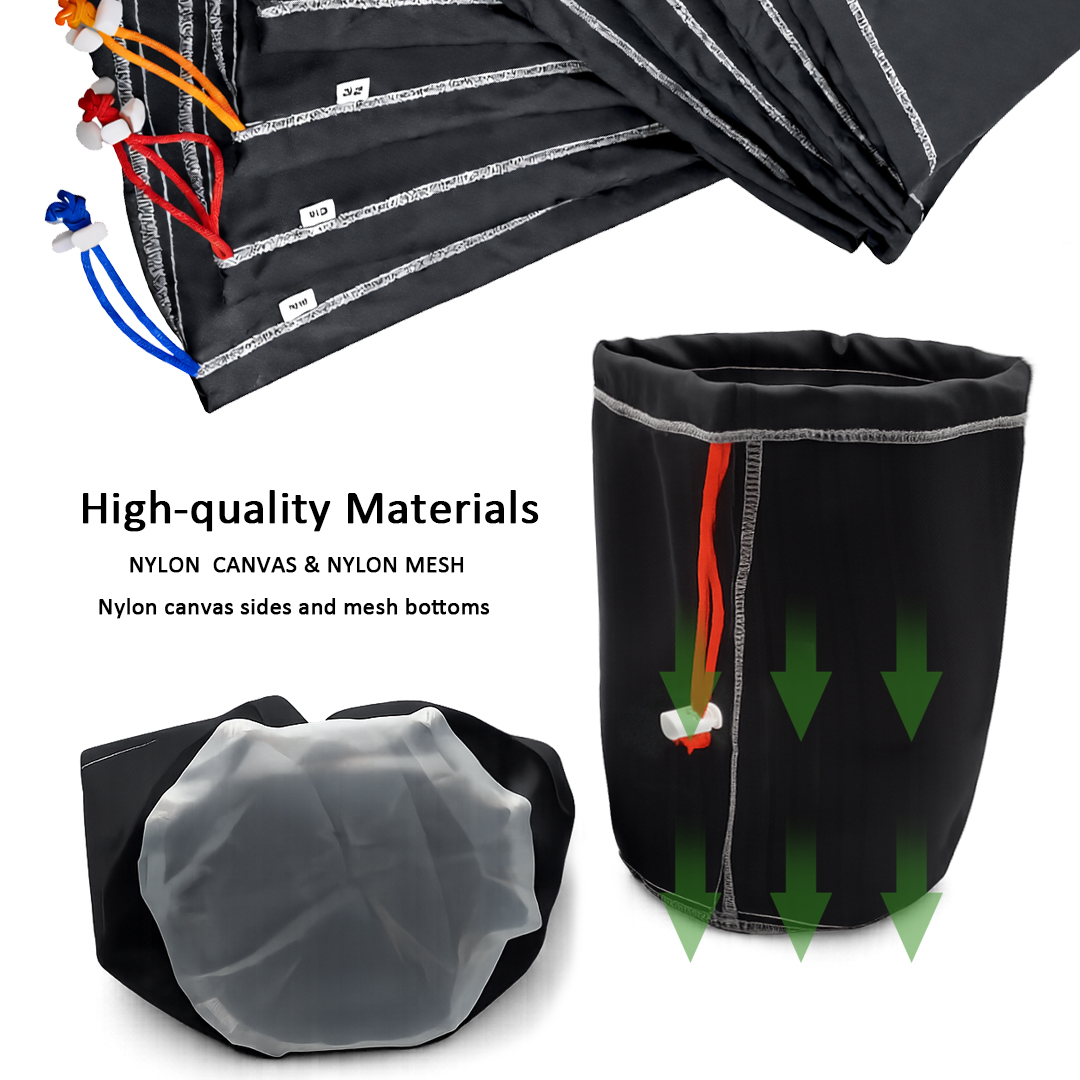
Bubble hash bags are multi-layer filtration systems that use water as a medium to separate particles by size. Each bag contains a mesh with a specific micron rating, allowing step-by-step filtration.
The system works by:
- Mixing material in cold water
- Allowing particles to separate
- Filtering through multiple micron layers
This method provides precise control over particle size separation and is commonly used in applications that require refined filtration.
To understand how micron sizes affect performance, refer to the Micron Filter Guide.
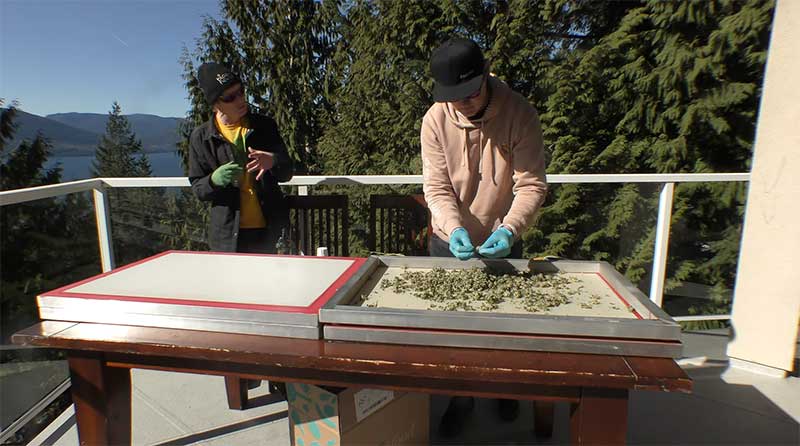
What Are Dry Sift Screens?
Dry sift screens are mesh screens used to separate particles without water. Material is placed on the screen and gently moved so that smaller particles fall through the mesh.
This method relies on:
- Mechanical agitation
- Gravity-based separation
- Single-layer filtration
Dry sift screens are simpler to use and require less setup compared to multi-bag systems.
Key Differences Between the Two Methods
The main differences between bubble hash bags and dry sift screens come down to filtration method, control, and output consistency.
Filtration Medium
Bubble hash bags use water to assist separation. This allows smoother movement and more controlled filtering.
Dry sift screens rely entirely on dry mechanical movement, which can be less precise.
Filtration Precision
Bubble hash bags offer multi-stage filtration through different micron sizes. Each layer captures a specific range of particles.
Dry sift screens typically use a single mesh size, limiting the level of control.
Consistency
Because bubble hash systems use structured layers, results tend to be more consistent and repeatable.
Dry sift results can vary depending on technique, pressure, and handling.
Ease of Use
Dry sift screens are simpler and faster to set up. They require minimal equipment and can be used immediately.
Bubble hash bags require more preparation, including water, containers, and proper layering.
Detailed Comparison Table
| Feature | Bubble Hash Bags | Dry Sift Screens |
|---|---|---|
| Method | Water-based | Dry |
| Filtration Layers | Multiple | Single |
| Precision | High | Medium |
| Consistency | High | Variable |
| Setup Complexity | Moderate | Low |
| Control | Strong | Limited |
Advantages of Bubble Hash Bags
Bubble hash bags provide several important benefits for users who require precision and control.
First, they allow multi-stage filtration. This means you can separate particles gradually instead of all at once.
Second, they offer better control over micron sizes. Each layer performs a specific function, improving accuracy.
Third, they produce more consistent results. Once the system is set up correctly, the process becomes repeatable.
Finally, they are suitable for both beginners and professionals when used properly.
For reliable and durable options, visit the Bubble Hash Bags product page.
Advantages of Dry Sift Screens
Dry sift screens also have their own advantages.
They are simple to use and require minimal setup. This makes them ideal for quick processing or beginners who want a straightforward method.
They are also portable and easy to maintain. Without water involved, cleanup is faster and less complicated.
Additionally, they can be useful in environments where water-based processing is not practical.
When Should You Use Bubble Hash Bags?
Bubble hash bags are the better choice when:
- You need precise particle separation
- You want consistent and repeatable results
- You are working with multiple micron sizes
- You require higher control over filtration
This method is ideal for structured workflows where quality and consistency are priorities.
When Should You Use Dry Sift Screens?
Dry sift screens are more suitable when:
- You need a quick and simple process
- You are working with minimal equipment
- Precision is not the primary concern
- You prefer a dry, low-maintenance method
They are often used for basic separation tasks or initial processing.
Performance Comparison in Real Applications
In practical scenarios, bubble hash bags generally outperform dry sift screens in terms of precision and consistency.
Because bubble systems use water and multiple filtration layers, they allow smoother separation and better control.
Dry sift screens, while convenient, rely heavily on user technique. This can lead to inconsistent outcomes, especially for beginners.
For users focused on efficiency and quality, multi-micron filtration systems are usually the preferred choice.
Cost Considerations
Cost is another factor when choosing between these methods.
Dry sift screens are typically less expensive due to their simple design.
Bubble hash bag systems may have a higher initial cost, especially for full multi-micron sets. However, they provide better long-term value through improved performance and durability.
Investing in high-quality filtration equipment often leads to better results and reduced waste over time.
Common Mistakes When Comparing These Methods
Many users make incorrect assumptions when choosing between these two systems.
One common mistake is focusing only on simplicity. While dry sift screens are easier to use, they may not provide the level of control needed for advanced applications.
Another mistake is underestimating the importance of micron layering. Without multiple filtration stages, separation accuracy is limited.
Some users also overlook the importance of material quality. Low-quality mesh can negatively impact both methods.
How to Choose the Right Method for Your Needs
To make the right decision, consider the following:
If your priority is precision and control, choose bubble hash bags.
If your priority is speed and simplicity, choose dry sift screens.
If you are working on a professional or repeatable workflow, a multi-layer filtration system is usually the better option.
For most users looking to improve consistency, bubble hash bags offer a more advanced and reliable solution.
bubble hash vs dry sift Conclusion
Both bubble hash bags and dry sift screens are effective filtration tools, but they serve different purposes.
Bubble hash bags provide greater precision, better control, and more consistent results through multi-stage filtration.
Dry sift screens offer simplicity and convenience but lack the same level of control.
The best choice depends on your specific needs, but for users focused on quality and efficiency, bubble hash bags are often the superior option.
Call to Action
If you are ready to improve your filtration process, choosing the right equipment is essential.
Explore our Bubble Hash Bags collection to find durable, high-performance filtration systems designed for consistent results.
If you want to better understand micron selection before making a decision, visit our Micron Filter Guide for a complete breakdown.


评论
发表评论